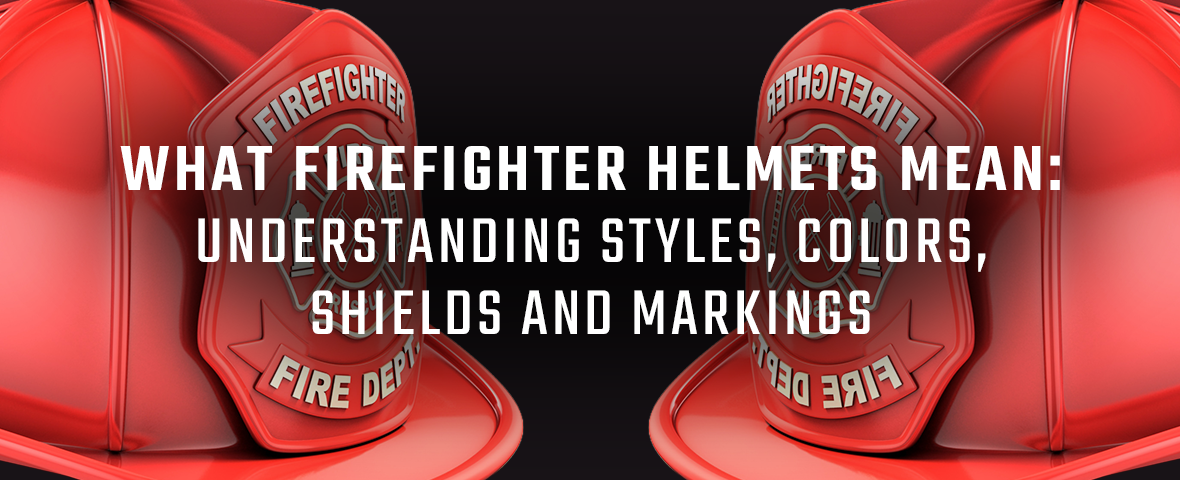
Firefighter helmets tell a story at a glance. Their styles, colors, shields and visibility markings reveal firefighters’ ranks, departments, company assignments and specialized training. Together, they help establish a clear command structure and ensure accountability when crews work in dangerous conditions. This guide breaks down the key helmet components and what each one communicates.
How to Decode a Firefighter’s Helmet
You can learn a lot about a firefighter through their helmet. Here are the aspects to consider:
The Helmet Style
As organized fire brigades formed during the late 18th century, firefighters needed headgear that provided both protection and identification. Early volunteers wore tall, cylindrical hats made of pressed felt, with painted company names. These were called “fire hats” or “parade hats” because brigades frequently marched in parades during this time.
They made visual statements about unit identity but didn’t sufficiently shield wearers. This led Henry Gratacap to develop the distinctive wide-brim leather design in the 1830s that became iconic in American firefighting. These helmets used thick, treated leather to guard against falling debris. They also prevented water from running down firefighters’ backs. Many departments still use them today as a nod to tradition, earning firefighters who wear them the nickname “leatherheads.”
Construction changed significantly after World War II, when mass production created more consistency. Fire services experimented with different materials, including metal, but these proved problematic because they conducted electricity. Modern designs rely primarily on plastic. Lightweight polymers meet current safety requirements while eliminating conductivity issues. They also allow departments to produce helmets in various colors for rank identification.
The Helmet Color
Firefighter helmet color meanings provide the fastest way to identify rank in a chaotic, smoke-filled scene. The colors can and do vary significantly by department. What holds true in one city may mean something completely different two counties over. Here are the most common associations you will encounter across the United States:
- White: Commissioners and chief officers like fire chiefs, deputy chiefs and battalion chiefs. In dark conditions, white helmets stand out clearly, making them easy for personnel to locate when urgent decisions need to be made.
- Red: Company officers such as captains and lieutenants. They serve as direct supervisors to firefighters on scene, and their red helmets make them simple to spot when personnel need direction.
- Yellow: Standard line firefighters. Yellow provides excellent visibility in low-light conditions and through smoke. The bright color helps commanders quickly confirm that all personnel are accounted for during roll calls.
- Black: Basic firefighters. This creates a clean distinction between white-helmeted chiefs and everyone else in the department. The meaning behind black helmets varies widely. Some view it as the traditional firefighter color, while others see it as a practical choice that wears less over time.
- Blue: Emergency medical services (EMS) personnel and paramedics working on a fire apparatus. Blue helmets enable commanders to identify personnel with certification during medical emergencies that occur alongside fire operations.
- Green: Safety officers who monitor scene conditions and enforce safety protocols. Green helmets signal their role as independent observers tracking hazards like structural instability and air quality issues.
- Orange: Probationary firefighters completing their initial training. Orange alerts officers that these members need closer supervision. The color also reminds commanders to assign tasks appropriate to each trainee’s level of training.
The National Fire Protection Association (NFPA) doesn’t regulate helmet colors. Their standards cover safety performance, such as heat protection, but color choice remains with each department. This is why you will see different systems depending on where you are.
The Front Shield and Front Holder
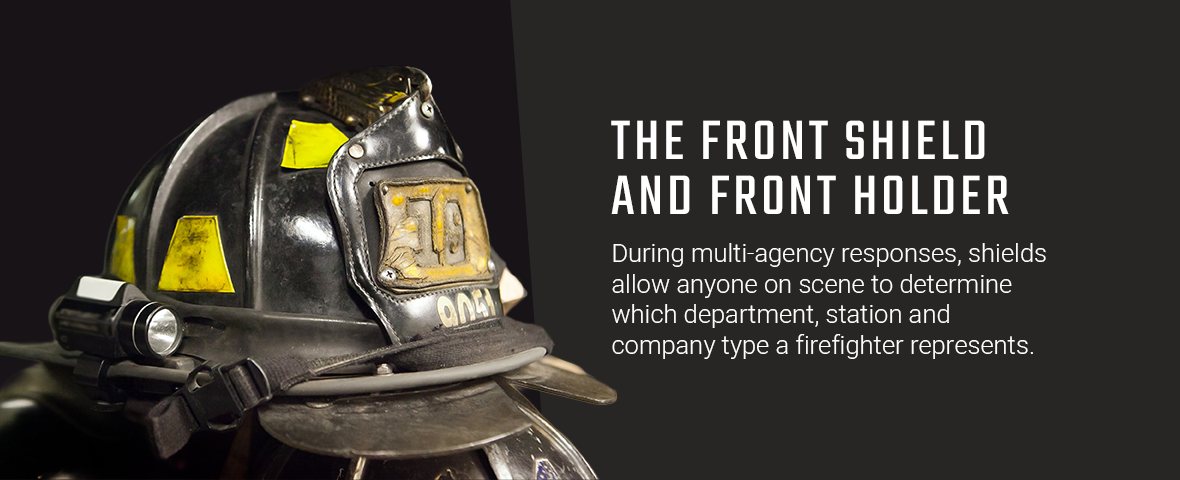
The front shield functions as a firefighter’s identification badge. During multi-agency responses, shields allow anyone on scene to determine which department, station and company type a firefighter represents. This streamlines communication and coordination when seconds matter.
Shields display several key elements. The department name appears prominently, followed by station numbers and company designations such as Engine Co. 1 or Ladder Co. 2. Some shields also include the firefighter’s initials. Shield color often corresponds with the helmet color system, reinforcing rank identification.
The front holder sits above the shield as a metal ornament that attaches the front piece to the helmet. In the past, it could be used to break windows. Today, it is also a symbol of pride for the profession. The eagle is the most common, embodying the honor of American firefighting. It is believed that in 1825, a sculptor created the eagle design for a firefighter’s burial monument. Still, departments across the country have adopted beavers, bulldogs, greyhounds, panthers, lions, snakes, seahorses, fish and more.
The Markings (Tetrahedrons, Stickers and Decals)
Additional helmet markings address safety and accountability in low-visibility conditions. The NFPA 1971 standard establishes requirements for protective gear performance, including features that help identify crew members from any angle.
Reflective tetrahedrons and geometric stickers applied to the helmet sides serve as position indicators. Departments assign different shapes, spacing or colors to distinguish roles within a company. This system allows accountability officers to track personnel and confirm everyone exits safely.
Side decals may also indicate specialized certifications. Hazardous materials response team (HAZMAT) qualifications, technical rescue skills or firefighter training milestones often appear as small emblems. Commanders rely on these markers to deploy personnel for specific tasks during complex operations.
What Helmets Mean to Firefighters
Helmets mark every stage of a firefighter’s career.
- The start of something meaningful: For probationary firefighters, receiving a department helmet marks acceptance into the ranks. That moment marks the transition from trainee and is one of the most significant milestones in their journey. The helmet symbolizes the department’s trust.
- A reminder of why we serve: During active duty, firefighters personalize their helmets with decals honoring fallen colleagues and stickers representing the communities they protect. Some also add family photos or religious medals.
- The story in the “scars”: Scratches, dents and heat damage become badges of honor. Each mark documents a fire fought, a life saved or a close call survived. Veterans wear their weathered helmets with pride as proof of commitment to the job.
- Keepsakes and symbols of sacrifice: Retired firefighters display their helmets as treasured reminders of careers spent serving others. For those who fall in the line of duty, helmets take on even more meaning. Displayed at memorial services, they symbolize the ultimate sacrifice and the courage required to run toward danger when everyone else runs away.
A helmet’s symbolic significance is why you will see departments and communities rally together when a firefighter’s gear goes missing during or after an emergency response.
Supporting the Fire Service
Since 2004, Fenton Fire Equipment has been helping stations across the country serve their communities effectively with reliable apparatus. Our extensive listings include engines, ladders, tankers, rescue vehicles and specialty units with detailed specifications and photos. Browse our options online or call 1-866-310-2077 to discuss your department’s specific needs.