The Difference Between a Ladder Truck and a Quint Fire Truck
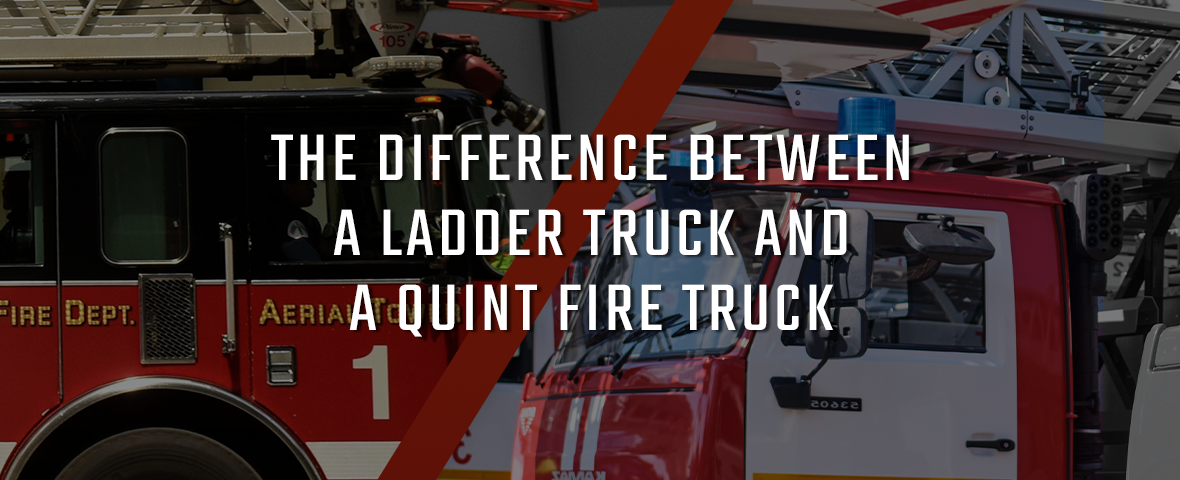
Choosing between a ladder truck and a quint fire truck is a significant decision for any fire department. While they may look similar at first glance, they serve different functions on the fireground.
Your choice of truck affects more than just how you fight fires. From budgeting to training demands, this guide will cover the key operational differences between ladder and quint trucks — and which one is best suited to your firefighting team.
What Is a Ladder Truck?
Aerial ladder trucks tackle fires at height, equipped with extendable ladders to allow firefighters to access blazes in office buildings or apartments. Traditional ladder trucks typically do not have tanks or water pumps. Instead, their primary purpose is support and rescue.
Key features of a ladder truck include:
- A hydraulic aerial ladder that can extend up to 100 feet.
- A ladder tip capacity of 250, 500 or 750 pounds.
- Ground ladders meeting NFPA 1900 regulations, often totaling 115 feet or more.
- Ventilation equipment.
- Search and rescue tools.
Primarily, ladder trucks are built to handle ventilation, search operations and high building access. They provide essential fire apparatus for aerial options, ground ladder deployment and firefighter access at high elevation.
What Is a Quint Truck?
A quint truck combines essential firefighting techniques in one vehicle. Its name refers to five key components:
- Fire pump
- Water tank storage
- Hose
- Aerial devices
- Ground ladders
A quint is an adaptable vehicle that can supply water or perform aerial operations, depending on the incident. The key features of a quint truck include:
- 40-plus feet of internal storage.
- 1,000-gallons-a-minute minimum fire pump.
- A minimum of 85-foot ground ladders.
- 300-gallon water tank.
- Dual functions of both a pumper and an aerial apparatus.
Quint trucks are a versatile option for departments looking to do more with fewer resources. They provide aerial operations, as well as deliver pumping and water supply functions.
Ladder Truck vs. Quint Truck: Key Differences
Although both trucks look similar, the difference lies in how each vehicle is used on the fireground. Understanding these distinctions helps departments make smarter deployment decisions.
Pump and Water Capabilities
A traditional ladder truck is not intended for direct fire attack. This means it typically has no pump or water tank. Instead, water supply must come from pre-pumped sources or engine companies. However, this allows ladder trucks to focus on rescue operations without the responsibility of managing water flow.
A quint, on the other hand, combines both engine and truck functions. These trucks include both a pump and an onboard water tank. This design allows them to stretch a line, supply water or support other units. As such, quint trucks are more flexible, often deployed in situations where other engines are delayed.
Primary Fireground Roles
Ladder trucks have a specified role in search-and-rescue operations for high buildings and roof operations. While they can help extinguish fires, it’s not their primary function. These types of trucks are best suited for urban areas or cities with multistory buildings.
Quint fire trucks perform dual functions. One call may require rescue equipment and ladders, while another may need a powerful fire hose. These types of trucks are best suited for rural and suburban areas, particularly in regions with longer-than-usual response times.
Staffing and Crew Considerations
Ladder trucks work best with full crews. Each truck component often benefits from a dedicated crew member, ensuring the company can operate efficiently and safely. One firefighter might handle aerial device deployment, while another may tackle roof ventilation. Having dedicated roles allows the truck company to respond quickly and methodically.
Quint trucks are a good fit for fire departments with smaller crews. However, personnel may be expected to handle both engine and truck operations. This requires each firefighter to be cross-trained and able to switch roles quickly.
Budgeting and Cost
Your budget is a major factor in which truck you purchase. Up-front cost, maintenance and long-term life all play a significant role.
A traditional ladder truck may have a lower initial cost than a quint. However, departments often need more personnel on the roster to cover all functions. These vehicles require strict maintenance inspections, including hydraulic systems, aerial devices and vehicle components, to ensure safety.
Quint trucks are often more expensive to purchase up front. However, these vehicles can replace multiple units in smaller departments. Just one quint truck could cover both engine and truck duties, reducing the need for separate apparatus. Due to their more complex systems, quint trucks often require more maintenance and testing requirements.
When evaluating costs, consider:
- Life cycle costs: You’ll need to factor in maintenance, repairs and replacement parts.
- Training requirements: Quint trucks require crews trained for multiple roles.
- Operational efficiency: One quint could replace multiple vehicles.
- Department size: Large teams may find ladder trucks more appropriate, while volunteer departments could benefit from a quint.
Ultimately, the area you’re operating in, your budget and the size of your team will dictate which truck is right for you.
Size Considerations
It’s important to consider the size of the vehicle you’re purchasing. Both a ladder truck and a quint are large, but there are essential differences in length, width and maneuverability.
Traditional ladder trucks are often longer and heavier than quint trucks. This can affect:
- Turning radius on narrow streets, despite some models having rear-axle steering.
- Placement of the truck in congested areas.
- Garage and station storage.
- On-site parking.
Quint trucks are slightly more compact than ladder trucks. They can be easier to maneuver in tight streets, helping them get to isolated areas. However, they still require significant space in storage bays.
Both apparatus types require planning for:
- Route access.
- Overhead clearances and tight corners.
- Parking at incidents.
Departments with narrow streets may find quint trucks more suitable to their needs. Larger departments with dedicated engine support may prioritize ladder trucks for specialized tasks.
When choosing between a ladder truck and a quint, consider how each vehicle fits into long-term planning. Factors such as response coverage, staffing levels and apparatus capability are all reviewed by the Insurance Services Office as part of its broader assessment.
Choose the Right Apparatus for Your Department
Choosing the right fire apparatus is about more than equipment. You have to consider staffing, budget, operations and safety to determine the ideal fit for your department.
Fenton Fire Equipment has decades of experience in helping fire departments select the best apparatus to serve their communities. We offer a wide range of new and used fire trucks and have assisted in thousands of apparatus sales worldwide.
We can help you evaluate a range of ladder trucks, quint trucks and accessories. Your department’s efficiency starts with the proper apparatus — let us help you find the right fit. Contact our specialist team to discuss your needs.