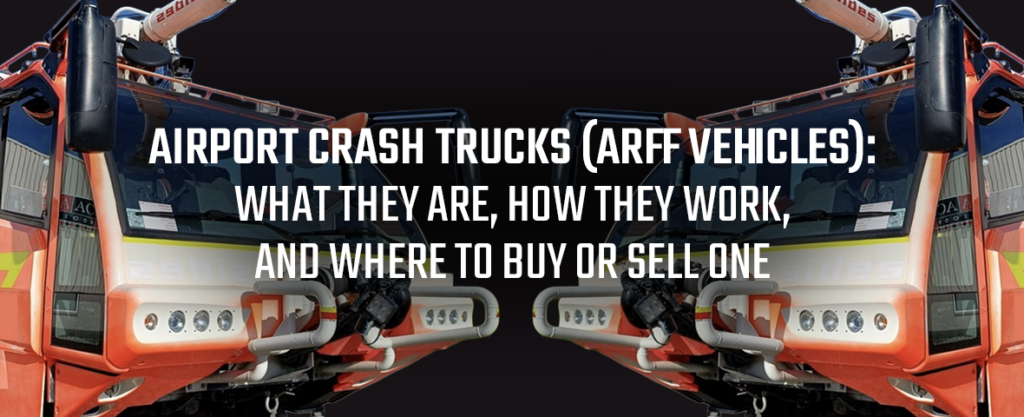
Airport crash trucks are specialized vehicles that respond to aircraft fires and incidents. They’re built differently than standard fire trucks because they need to handle unique challenges, like jet fuel fires, large aircraft structures and tough terrain around runways.
Understanding how these trucks work helps you make better decisions when buying, selling or upgrading your fleet.
What Is an Airport Crash Truck?
An airport crash truck is a specialized firefighting vehicle designed specifically for aircraft rescue and firefighting (ARFF). Unlike municipal fire trucks, these vehicles are built to respond quickly to aircraft emergencies on airport property. These trucks carry large amounts of water and foam, have powerful pumps and can navigate rough terrain like grass or gravel near runways.
When Is an Airport Crash Truck Used?
ARFF vehicles are used in several situations:
- Aircraft fires: Jet fuel fires burn differently than typical fires and require specialized foam agents carried in large quantities.
- Emergency landings: Emergency situations trigger a standby response, with teams ready to provide immediate assistance if needed.
- Fuel spills: Foam deployment suppresses vapors and prevents ignition during fuel spills on the tarmac or runway.
- Standby support: Emergency drills and VIP arrivals call for vehicles to be positioned nearby as a precaution.
Response time is critical. The faster an airport crash truck arrives on scene with water and foam, the better the chances of controlling a fire and protecting passengers and crew.
Differences Between ARFF and Municipal Fire Trucks
While both types of vehicles fight fires, airport crash trucks are built for a completely different mission. Here’s what sets them apart:
- Water and foam capacity: ARFF vehicles carry significantly more water — often thousands more gallons — compared to municipal engines. They also carry large amounts of foam concentrate to combat jet fuel fires.
- Speed and mobility: Airport crash trucks are designed for speed and can handle off-road conditions. Municipal trucks prioritize urban navigation and ladder access.
- Specialized equipment: Many ARFF vehicles include features like roof turrets, bumper turrets and High Reach Extendable Turrets (HRET), sometimes called Snozzles. These Snozzles can extend to pierce aircraft fuselages and deliver foam or water directly inside.
- Pump capacity: ARFF pumps can discharge foam and water at high gallons per minute to quickly put out large fires.
How to Buy a Used Airport Crash Truck
Buying a used ARFF vehicle can save your department significant money, but it’s important to do your homework. Here’s what to keep in mind:
- Inspect the vehicle thoroughly: Airport crash trucks see heavy use. Have a qualified mechanic inspect the engine, transmission, pump system and foam delivery system before purchase.
- Review maintenance records: A well-maintained truck with documented service history is far more reliable than one with gaps in its records.
- Check for parts availability: Older models may be harder to service if parts are no longer manufactured. Make sure you can source replacement parts when needed.
- Consider training needs: If your team isn’t familiar with the specific ARFF model you’re buying, plan for training. These vehicles have complex systems that require proper operation.
A well-chosen used truck can provide years of reliable service at a fraction of the cost of new equipment. The best way to make the most of your purchase is to invest in proper inspection and maintenance up front.
You can find used airport crash trucks through specialized dealers, government surplus auctions and listings from airports upgrading their fleets. Take your time and weigh up your options — it’s an important investment.
Know Your Index Requirements
Before shopping for a used ARFF vehicle, understand your airport’s regulatory requirements. The Federal Aviation Administration (FAA) requires certain airports to maintain ARFF capabilities based on the size and type of aircraft they serve. These vehicles must meet National Fire Protection Association (NFPA) aircraft rescue and firefighting standards.
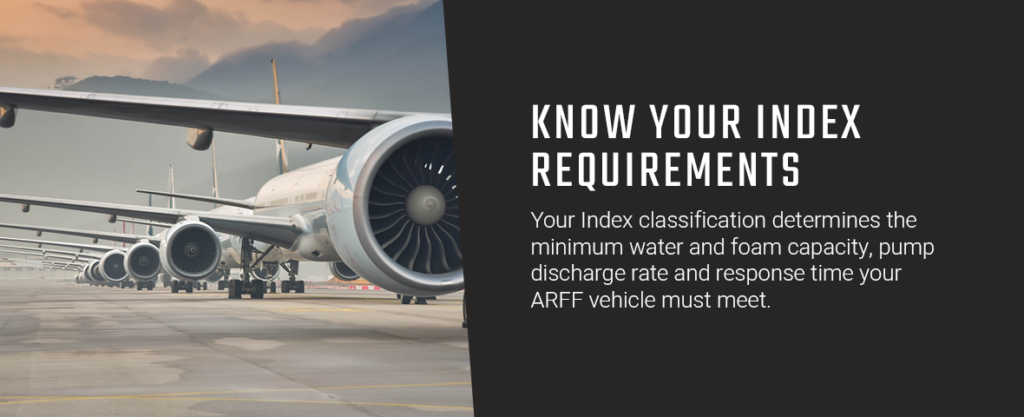
Airports are classified into different Index categories, A through E, depending on aircraft length and fuselage width. Your Index classification determines the minimum water and foam capacity, pump discharge rate and response time your ARFF vehicle must meet.
Check your airport’s Index classification before you start looking at listings. Understanding these requirements puts you in a stronger position to evaluate options and make a confident purchase decision.
Understand ARFF Vehicle Costs
Airport crash trucks are a significant investment, with pricing varying widely based on age, condition and capabilities. New ARFF vehicles can reach prices in the millions, depending on Index classification, features and manufacturer specifications.
Used models offer more budget-friendly options. Prices depend on several factors:
- Age and condition: Newer trucks with lower hours command premium prices — a 2014 Oshkosh Snozzle ARFF might list around $650,000, while a well-maintained 2001 model could be $85,000.
- Index classification: Higher-Index vehicles with greater water capacity and pump rates cost more than smaller units designed for regional airports.
- Features and equipment: Vehicles equipped with HRET, advanced foam systems and modern electronics hold their value better than basic configurations.
- Manufacturer reputation: Brands like Oshkosh and Rosenbauer are known for reliability and parts availability, which influences resale value.
Browse used airport crash truck listings to see current market options. Many departments also explore financing to manage acquisition costs within their budget cycles.
How to Sell a Used Airport Crash Truck
If your airport is upgrading its fleet and you need to sell a used airport crash truck, a few steps can help you get the best return:
- Document everything: Gather all maintenance records, service logs and any upgrades or repairs. Buyers want to see proof that the vehicle has been well cared for.
- Be transparent about condition: Disclose any known issues or areas that need work. Honesty builds trust and helps the sale move forward smoothly.
- Clean and detail the vehicle: Take time to wash, detail and photograph the vehicle from all angles.
- Know your market: Research what similar ARFF vehicles are selling for. Price competitively based on age, condition and features.
- Use the right sales channels: List your truck on specialized equipment marketplaces, reach out to fire departments directly or work with a dealer who understands the ARFF market.
Selling ARFF equipment takes time, but with the right preparation, you’ll attract serious buyers who recognize the value.
Get the ARFF Vehicle Your Airport Needs
Finding the right airport crash truck, or the right buyer for your used ARFF vehicle, doesn’t have to be complicated. At Fenton Fire Equipment, we specialize in buying, selling, financing and shipping firefighting apparatus, including ARFF vehicles. Whether you’re looking for a used airport crash truck that fits your budget and Index requirements, or you need help selling one, we’re here to make the process straightforward.
Give us a call at 318-660-3499 or visit our listings to see what’s available. We’ll work with you to find the right solution for your airport fire department.