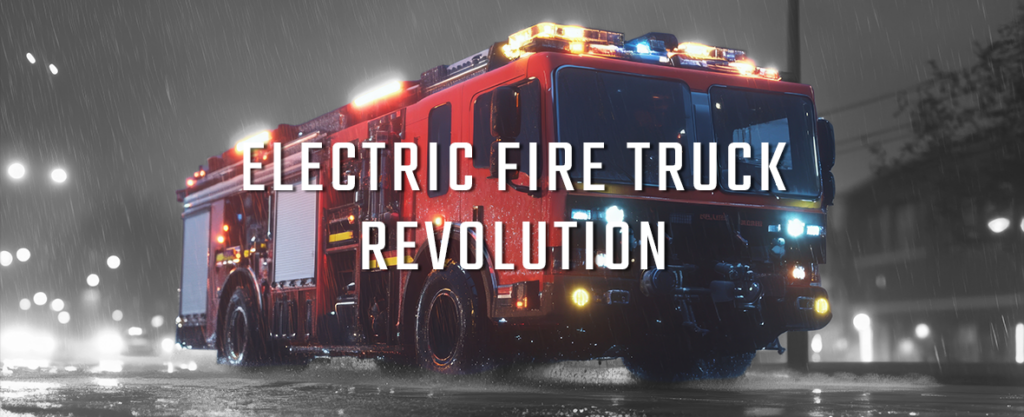
For decades, the fire service has relied on the rumble of a diesel engine to signal that help has arrived. But in stations from Berlin, Germany, to Madison, Wisconsin, the sound of response is changing. Electric fire apparatuses are now logging calls, pumping water and responding to emergencies in the real world.
However, for most fire chiefs and apparatus committees, the shift to electrification brings as much skepticism as it does excitement. Questions remain regarding range, reliability during multi-alarm fires, necessary infrastructure and the undeniable sticker shock of the initial purchase price. Here, we provide the operational facts and real-world challenges you need to decide if your station is ready for the electric fire truck revolution.
How Zero-Emission Apparatus Actually Works
To evaluate an electric fire truck, you first have to understand that the architecture is fundamentally different from the diesel pumpers sitting in your bay today.
Propulsion and Pumping
In a traditional diesel engine, the transmission sends power to the wheels for driving or via a split-shaft power take-off (PTO) to the pump. Electric fire trucks decouple these systems. They utilize electric motors on the axles for propulsion, providing instant torque to move the apparatus, and separate electric motors dedicated solely to driving the water pump.
One of the biggest misconceptions is that these trucks are entirely battery-dependent, leaving crews stranded if the charge runs out. In reality, market leaders like Pierce and E-One electric fire trucks often feature an onboard energy backup system.
These hybrid fire trucks run on battery power for the vast majority of calls. However, if the battery state-of-charge (SOC) drops below a certain threshold during a prolonged operation, a compact diesel engine automatically engages to recharge the batteries or drive the pump directly.
Battery Tech and Regenerative Braking
Moving a heavy-duty rescue pumper requires a significant amount of energy. These trucks utilize high-voltage architectures. The battery packs are positioned low in the chassis, often between the frame rails, which lowers the center of gravity compared to legacy designs.
Furthermore, these trucks utilize regenerative braking. When the driver lifts off the accelerator, the electric motors reverse direction to act as generators, slowing the truck down and sending energy back into the battery. Regenerative braking significantly reduces wear on mechanical friction brakes, lowering maintenance costs for heavy fleets.
Operational Advantages of Zero-Emission Apparatus on the Fireground
Beyond the environmental mandate to go green, electric apparatus offers tangible tactical advantages for the crews operating them.
- Cancer reduction: According to the International Agency for Research on Cancer (IARC), diesel engine exhaust is a Group 1 carcinogen. On a traditional fire scene, the pump operator stands directly next to a running diesel engine and may inhale exhaust particulates. Electric operations eliminate this exposure, creating a safer, cleaner zone around the engine for the crew.
- Noise reduction and improved communication: Diesel engines are loud. The constant drone complicates radio traffic and forces crews to shout. Electric motors are virtually silent at idle and incredibly quiet while pumping, allowing crew members to communicate clearly.
- Vehicle performance: Electric motors provide 100 percent of their torque instantly. The Pierce Volterra, for instance, uses a parallel-electric drivetrain that offers superior acceleration compared to standard diesel models. Instant power means faster response times out of the station and better handling in dense urban traffic.
- Balance improvements: The heavy battery packs in electric fire trucks are mounted low in the chassis, providing a lower center of gravity, which helps reduce body roll and the risk of rollovers.
- Maintenance savings: Theoretically, an electric drivetrain is much simpler than an internal combustion engine. There is no transmission fluid to change, no engine oil to monitor and fewer moving parts to break. Combined with the reduced brake wear from regenerative braking, long-term operational expenses can be significantly lower, helping to offset the vehicle’s high initial purchase price over its life.
Electric Fire Truck Problems and Challenges
Despite the many benefits of electric fire trucks, they can pose several challenges upon adoption:
- High up front capital: According to a case study regarding the purchase of a Pierce Volterra by the City of Redmond, Washington, the total cost for the electric engine was approximately $2.1 million. By comparison, a comparable traditional diesel-powered fire engine costs roughly $1 million.
- Infrastructure costs: Buying the truck is only half the battle. The same Redmond case study noted that charging infrastructure costs added over $352,000 to the project. Fire stations often lack the electrical service required to support DC fast chargers, requiring expensive trenching and panel upgrades.
- Range anxiety: While diesel backups solve the issue of getting stranded, range anxiety is a cultural hurdle. Firefighters must trust a battery management system to handle multi-alarm fires, and the logistical challenge of plugging the truck in after every run must become ingrained in the crew’s routine.
- Technical training: Most department mechanics are masters of diesel engines, not high-voltage electricians. Maintaining these vehicles requires specialized high-voltage certification. This high qualification level creates a training gap and potentially forces departments to rely heavily on manufacturer service contracts rather than on in-house maintenance.
Understanding NFPA 1900 Standards
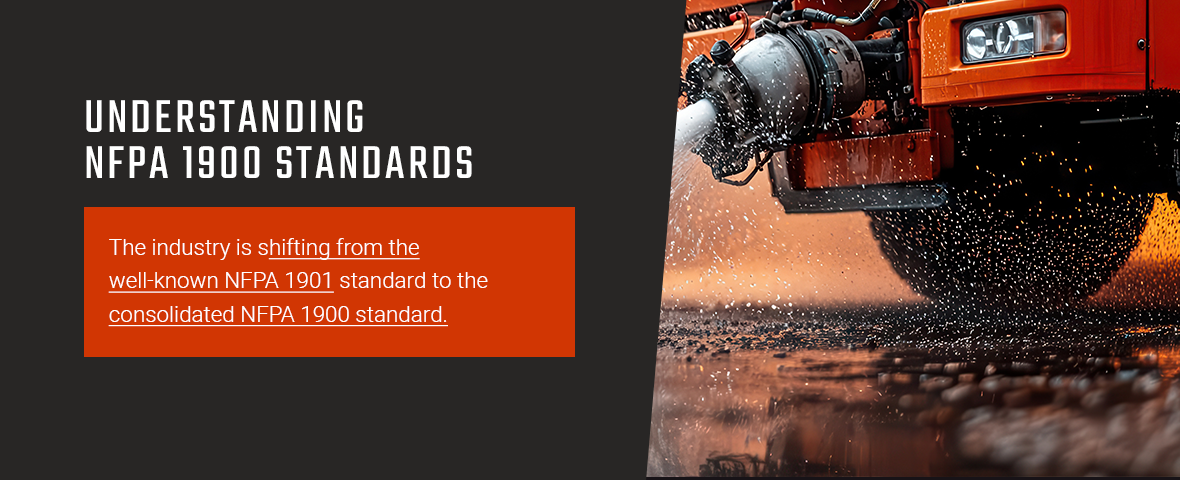
As the technology evolves, so do the regulations. The industry is shifting from the well-known NFPA 1901 standard to the consolidated NFPA 1900 standard.
For electric apparatus, NFPA 1900 introduces specific safety requirements, including:
- High-voltage identification: All high-voltage cabling must be colored orange to warn first responders and mechanics of electrocution hazards.
- Isolation switches: Accessible manual disconnects must be present to isolate the high-voltage battery from the rest of the vehicle during service or in the event of an accident.
- Pump capacity: Regardless of the power source, the apparatus must still meet stringent pump testing requirements.
Is Your Department Ready for Electric Fire Trucks?
For the vast majority of fire departments in the United States, a complete switch to electric firetrucks is not yet feasible. The technology is rapidly maturing, and early adopters in major metropolitan areas are paving the way, but the infrastructure is still lagging.
If you are a large metro department with a sustainability mandate and a dedicated facilities budget, testing a Rosenbauer RT, E-ONE or a Pierce electric fire truck makes sense. However, for the majority of the U.S. fire service, maintaining a reliable, high-quality diesel fleet remains the operational standard. The technology is maturing, but until charging infrastructure becomes ubiquitous and costs decrease, diesel remains the go-to workhorse.
Manage Your Fleet Transition With Fenton Fire Equipment
The transition to electric fire apparatus will not happen overnight. It will likely be a years-long process where diesel and electric units operate side by side. For many departments, the smartest move right now is a strategic holding pattern. By extending the life of your current fleet or purchasing late-model used diesel equipment, you can save a significant amount of capital today. Your department can then bank this capital to fund the massive station infrastructure upgrades required for an electric future.
Whether you are looking to liquidate older diesel assets to fund a new electric purchase or you need a reliable used engine to bridge the gap while you wait for infrastructure upgrades, Fenton Fire Equipment is your trusted partner. We specialize in the buying, selling and valuing of used fire apparatus. If you are ready to assess the value of your fleet or explore cost-effective options for your next upgrade, contact us today or browse our current listings.